May
21

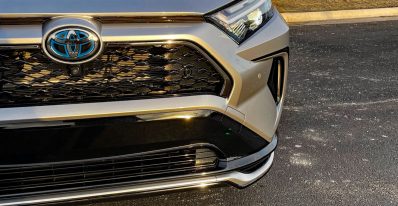
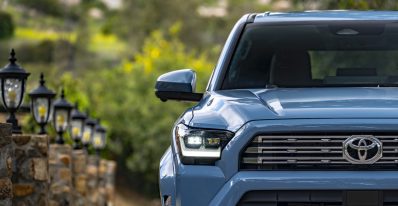
I’m not suggesting that this is a problem; I am just sharing a fascinating tidbit: Of the 31 separate Toyota, Scion, and Lexus models for which Automotive News reports sales, four models alone account for more than half of that volume. Just four.

Toyota Motor Sales, USA sold nearly 2.1 million cars in the U.S. during calendar year 2012. Combining for a hefty 1.1 million of those sales are the Camry, Corolla (including Matrix), Prius (all versions), and RAV4.

Toyota’s U.S. Sales, Calendar 2012
Combined 2012 sales1,104,369
Camry404,886
Corolla290,947
Prius236,659
RAV4171,877

What this means is open to interpretation. Three of these big-volume vehicles fall into what Ford recently began calling the “Super Segment,” specifically compact and midsize cars and compact crossovers. These segments have enjoyed the bulk of the post-recession auto-sales boom.

However, despite Ford’s success in these categories, we see that its Super Segment plus dedicated hybrid (SSPDH) performance trails Toyota’s by a wide margin:

Ford’s U.S. Sales, Calendar 2012
Combined 2012 sales761,502
Escape261,008
Focus245,922
Fusion241,263
C-MAX Hybrid13,309
May
21

Note: See Consumer Guide Automotive’s detailed review of the 2013 Ford C-MAX Hybrid.

I got into the Ford C-MAX Hybrid this weekend, and a number of things caught my attention—good and bad.

Most impressively, C-MAX is remarkably sprightly for a hybrid. It’s quick off the line, and power delivery is strong and smooth. Moreover, it has plenty of juice for merging and passing. The 2.0-liter 4-cylinder/CVT powertrain is the same one that’s in the Ford Fusion Hybrid, which we’ve also lauded. Honestly, this powerplant feels nothing like the fussy, wussy hybrid engines of a few years back. It actually feels like a normally aspirated V6.

In more than 200 miles of driving, my Consumer Guide colleagues and I have averaged around 34 mpg in the C-MAX. That’s awesome for a car with such “go,” but it’s alarmingly low for a vehicle that is EPA rated at 47 mpg city/47 highway. We’re not the first to call out this discrepancy. In fact, it’s become a national story, and in April C-MAX Hybrid and Fusion Hybrid owners in Pennsylvania sued Ford for false mileage claims.

May
20

While channel surfing on a lazy weekend afternoon about five years ago, I stumbled across a program called Wheeler Dealers, airing on Discovery Channel’s HD Theater (now called Velocity TV). The premise of this British television show was fairly simple. Former car dealer Mike Brewer would purchase a “modern classic” car, hand it off to expert mechanic Edd China for a light-to-moderate restoration, and then sell it in the hopes of making a profit.

The first several seasons focused on affordable vehicles. Some that might be familiar to U.S. audiences include the Porsche 924, Saab 900 Turbo, Toyota MR2, Jeep CJ, Chevrolet Corvette C4, and Lexus LS400. Others featured U.K. or other Euro-centric models, including the Ford Capri (dubbed Britain’s Mustang), Austin Mini, Peugeot 205 GTi, and Lancia Delta Integrale.

Brewer’s charisma and China’s ability to fix pretty much anything has allowed Wheeler Dealers to develop quite a following both in the U.K. and abroad. Though the featured cars have become more expensive over the years, the overall concept remains unchanged. It’s must-see television if you’re even remotely interested in cars.

May
17

Editor Dave Hall used Consumer Guide's long-term 2013 Nissan Pathfinder to move from one apartment to another.

Note: Read Consumer Guide’s complete review of the 2013 Nissan Pathfinder.

Normally, the staffers here at Consumer Guide Automotive switch cars twice a week. A few days in a car is enough for an editor to observe all of the car’s behaviors, use all of its features, and spend an adequate amount of time driving it to make a good objective report. Most cars stay with us for about two weeks, meaning that four editors have the chance to thoroughly drive a vehicle, compare opinions, and come up with a verdict, which becomes the review we post on our website.

However, our long-term test cars stay with us for as few as three months or as long as a year in most cases, so we can spend more time with them. Additionally, having a vehicle for a long period allows our editors to test the vehicle in several different situations, in varying weather conditions, and while performing myriad tasks.

May
16

In a scene from the 2013 film, Gatsby drives Daisy in Tom’s blue car (a 1933 Auburn) while Tom drives Gatsby’s automobile (a 1932 Duesenberg) with Nick and Jordan as his passengers. Obviously, these 1930s vehicles are not right for the story, which was set in 1922. By the way, the Auburn shown here is authentic, while the Duesenberg is a replica.

Cars were an important part of the Jazz Age and of F. Scott Fitzgerald’s The Great Gatsby. Fitzgerald mentions only two cars by make in The Great Gatsby— Nick Carraway’s Dodge and Gatsby’s Rolls-Royce. The rest are left to the reader’s imagination.

Jay Gatsby’s Rolls-Royce plays a crucial role in the story and is described as having “a rich cream color, bright with nickel, swollen here and there in its monstrous length with triumphant hat-boxes and supper-boxes and tool-boxes, and terraced with a labyrinth of wind-shields that mirrored a dozen suns.” Jay Gatsby embodied conspicuous consumption, and a Rolls with flamboyant coachwork in a bright color suited him. The 1928 Rolls-Royce Phantom I Ascot dual-cowl phaeton used in the 1974 production of The Great Gatsby is the perfect embodiment of the Gatsby car—except that it’s too new. The novel was published in 1925 and was set in 1922. Imagine this 1922 Rolls-Royce Silver Ghost painted yellow.

May
15

2014 Mercedes-Benz S-Class

Well, maybe it doesn’t look quite like Yogi Bear, but from this angle the steering wheel with the speedometer and tachometer look like the face of an old-time cartoon character. Felix the Cat? Something. This design faux pas reminds me of the smiley face front grille on some of the Mazdas a couple years back.

Jokes aside, the Mercedes-Benz S-Class has long been one of the finest cars in the world, and the hands-down favorite of Consumer Guide Publisher Tom Appel. Today, Mercedes revealed photos of the 2014 version, the first time the car has been redesigned since 2007.

Regarding the redesign, Mercedes CEO Dieter Zetsche stated that “our aspirations were ‘the best or nothing’ in every respect.” Yet not surprisingly, exterior styling was only modestly changed. The S-Class is slightly wider and boasts a larger grille. The car’s driver-assistance packages include 30 features, including 11 that are new or significantly enhanced.

Keep following the Daily Drive and Consumer Guide Automotive for more details on the 2014 Mercedes-Benz S-Class. In the meantime, enjoy the photographs (and try not to giggle).

May
15

As luck would have it, the Consumer Guide test fleet contains both a 2013 Hyundai Azera and a 2013 Hyundai Sonata Limited this week. The former is Hyundai’s entry into the “near luxury” large-car segment; it competes against the Chevrolet Impala, Kia Cadenza, and Toyota Avalon. The latter is the ritziest trim level of Hyundai’s mainstream midsize car. We thought it would be enlightening to examine these stablemates side-by-side to see exactly what the Azera delivers over the Sonata.

Our Azera tester is essentially loaded. It’s equipped with the $4,000 Technology Package, which includes high-end features such as a panoramic sunroof, Infinity audio system, HID headlights, rear park assist, and power rear sunshade with manual side sunshades. The total sticker price? $37,225.

Our Sonata Limited is technically not the true top-of-the-line model—it has the 198-horsepower 2.4-liter 4-cylinder engine, not the available 274-hp turbocharged 2.0 four. However, it is otherwise loaded. It’s equipped with the $2,900 Premium Package, which adds a panoramic sunroof, navigation system with backup camera, and Infinity audio system. Its sticker price checks in at $29,655. (The 2.0 Turbo version adds 18-inch wheels in place of 17s and tacks on another $1,750 to the bottom line.)

May
15

Note: Frank Peiler is the publisher emeritus of Consumer Guide Automotive. For more of Frank’s “What If?” artwork, check out his blogs on the 1957 Mercury, 1957 Packard, Cord 810, and Lincoln Continental.

1955 Chevrolet by AMC

The 1955 Chevrolet had it all. It was all-new from bumper to bumper with a new frame, new V8 engine, and new body.

The body design was a complete departure from previous Chevys. The hood was low, and the fender line was window-sill high. With a wide panoramic windshield and Ferrari-like grille, it looked like it was designed as a show car for one of the General Motors Motoramas. Here it is in hardtop form . . .

1955 Chevrolet Bel Air

So what if American Motors, Chrysler, Ford, and Studebaker had applied Chevrolet design elements onto their 1955 bodies? Here is what I think they might have looked like . . .

1955 Chevrolet by AMC
I used AMC’s Rambler as a basis for the RamAir. Hooded headlight bezels, parking lights, and a new grille finish off the front end. Reworked quarter panels with a new taillight/back-up light assembly complete the rear (see drawing above). Bel Air-like side trim accommodates the ’50s two-tone paint scheme (above). The wraparound windshield is the biggest and probably the most expensive change to the old Nash body.

May
14

Jeep CJ-7

I’ve driven some pretty refined vehicles in my day. In an earlier blog post, I noted my affinity for the Mercedes S-Class. When it comes right down to it, I’ve grown intolerant of vehicles that make noise—or ride too harshly—while offering little real performance in exchange.

Around the office, I’m the guy who complains about engine quake at idle and road noise at speed. I appreciate precise and accurate shifters (Acura TL), quality AM radio reception, and smooth-opening center-console lids. In my opinion, cars cost way too much these days for anyone to put up with less than excellence. Still . . .

Being a man means answering to chromosomal urges that defy logic. So while I would like to spend most of my time driving fast luxury sedans, there’s a part of me, say 13 percent of me, that aches for something more fundamental—something more, dare I say it . . . honest.

For me, now, that honest ride would be a Jeep CJ-7.

May
13

Fiat 500

There are a lot of great cars on the market today. They go about the business of transporting people with surprising performance, impressive fuel economy, and historically high levels of refinement and creature comforts. But for the most part, you could wring every drop of personality out of them and there wouldn’t be enough to coat the bottom of the ashtray that the Fiat 500 doesn’t have.

Certainly any number of high-end sports and luxury cars have personality (some might say a snobbish one), but what we’re talking about here are cars could substitute for what the majority of people would otherwise buy.

Fiat 500
Although the 500’s price of entry is now up to a little less than $17,000 including destination, that’s for a nicely outfitted car and not much more than you’d pay for a similarly equipped subcompact—that’s not nearly as endearing. The automatic transmission will add a stiff $1,250, but if you’re on the fence, the slick-shifting manual is the better choice. Also offered is a convertible version (it’s really more of a very large sunroof) that starts just over $20,000. Sure it’s small, but the 500 is great fun to drive and delivers most of the positive attributes of a typical subcompact competitor.

New Review!

2014 Kia Sorento

2014 Kia Sorento

Classic Cars

Collectible Automobile Magazine

Archives

  • [—]2013
  • [+]2012